The hoses and fittings you service in October are the ones that hold in January. That is the whole case for hydraulic system fall maintenance. Cold does not create new problems out of nowhere. It finds the weak spots that are already there and pushes them over the edge, usually on the first hard freeze, usually at the worst possible time.
Fall is the cheap window. The weather is still mild, the equipment is still easy to work on, and a marginal hose is still a scheduled swap instead of a roadside failure. Wait a few weeks and the same hose becomes a cold-morning breakdown with a crew standing around it. This is a practical rundown of what to check now, what to replace before the freeze, and why the timing matters more than most operations treat it.
What cold actually does to a hydraulic system
You do not need the full physics to prep well, but a few things drive everything on the checklist.
Cold thickens hydraulic fluid. Thicker fluid moves slower, so on a cold startup the pump can struggle to pull oil and parts can run starved for the first few minutes. That is when a lot of cold-weather wear happens, before the system reaches operating temperature.
Cold also stiffens rubber. Hose covers and seals that flex fine in summer get hard and brittle in the cold. A hose with a small surface crack you can barely see in October splits wide open once it stiffens and takes a pressure spike in January. Fittings and couplings that were weeping a little start leaking more as the metal contracts and the seals harden.
Then there is moisture. As equipment cycles between warm operation and cold shutdown, condensation forms inside reservoirs and lines. Water in the fluid is bad news in any season, and freezing makes it worse.
None of this is exotic. It is the same handful of failure modes every year, which is exactly why a fall pass pays off.
A practical hydraulic system fall maintenance checklist
Keep this at the level a crew can actually run. It is not an engine teardown. It is a focused pass on the parts that fail in the cold.
Fluid: grade, level, and condition
Check the hydraulic fluid first. If your equipment runs through the winter and you are on a summer-weight oil, this is the time to look at a lower-viscosity or winter-grade fluid with a lower pour point so it flows on a cold start. What grade is right depends on the machine and the duty, so check the equipment manual rather than guessing. Top off levels while you are there, and if the fluid looks milky or cloudy, that is moisture, and it needs attention before the cold sets in.
Hoses and fittings: find the marginal ones now
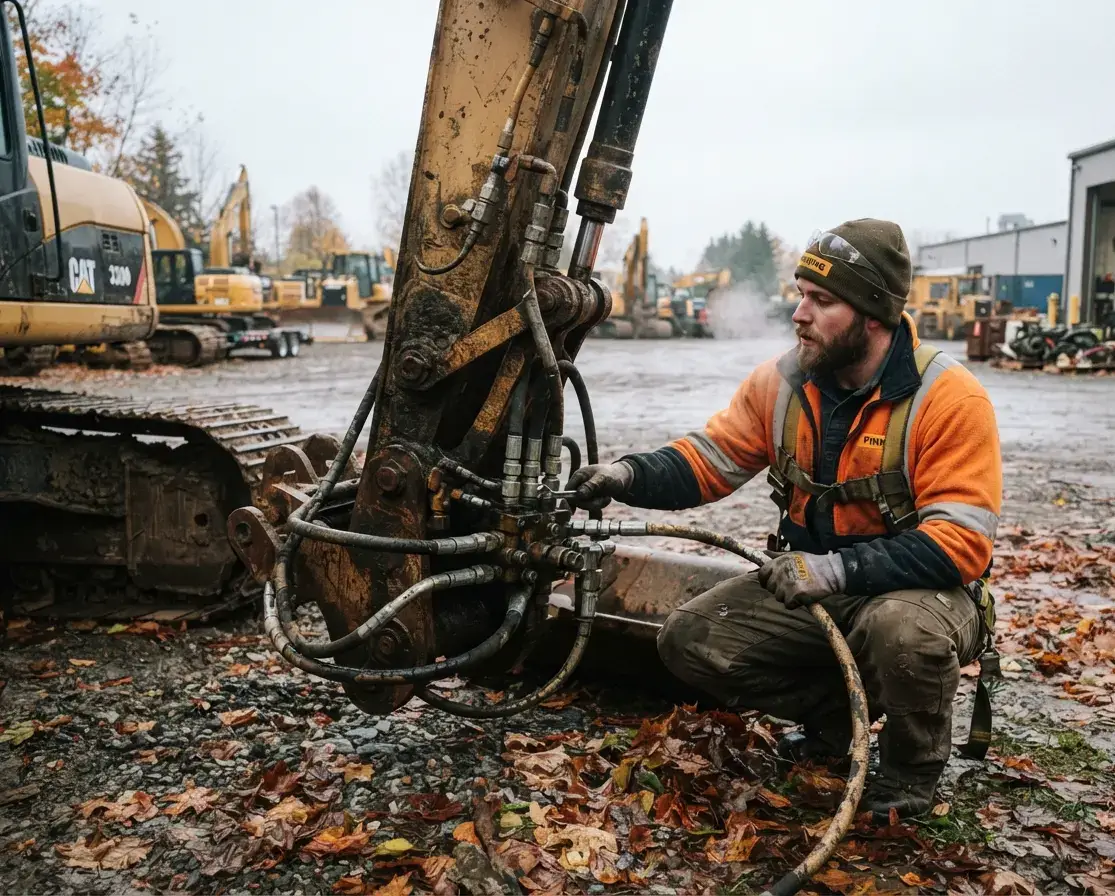
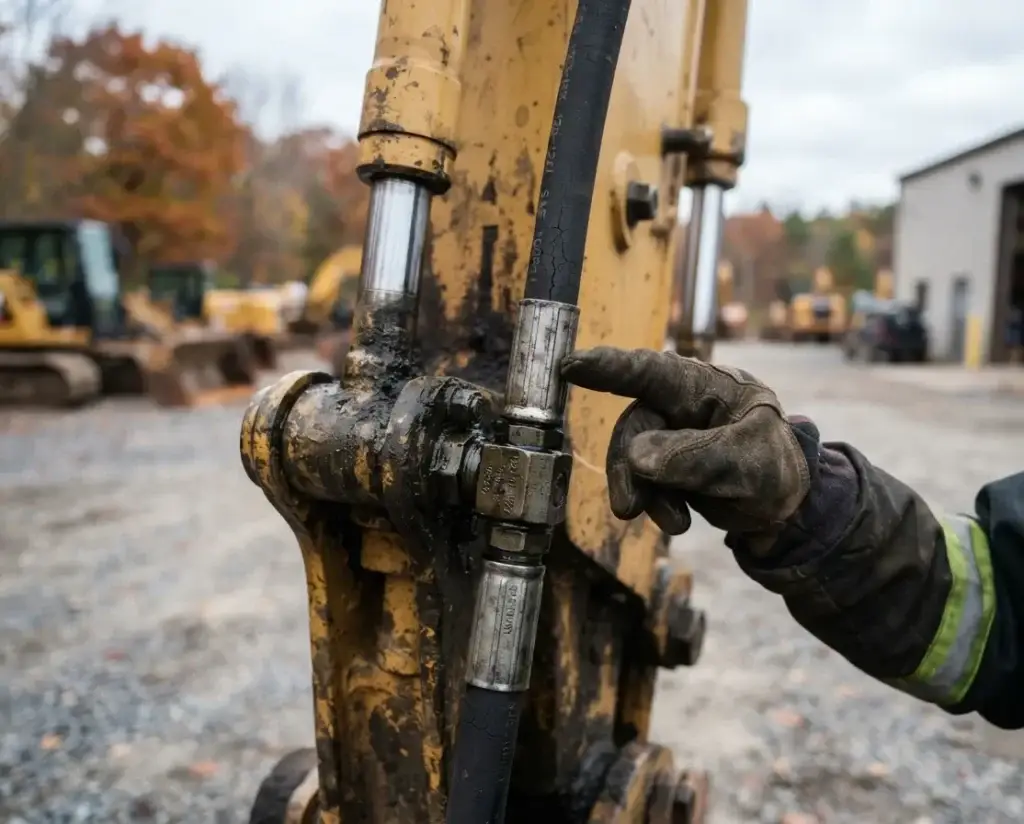
This is the part a hose shop cares about most. Walk every hose you can reach on each machine. Look for surface cracking or a hard glazed cover, weeping at the crimps, rub points where a hose has worn against a frame or another line, and any fitting that shows a stain or seep. The hydraulic hoses and fittings that are marginal right now are the ones that let go first when the cold stiffens them. Flag them and replace them on your schedule, not the weather’s.
Seals and connections
Check cylinder rod seals and connection points for leaks. Seals harden and contract in the cold, so a joint that seeps a little in the fall can turn into a real leak in a hard freeze. A connection you snug up now is cheaper than fluid on the ground in January.
Cold-start and warm-up routine
Have a warm-up procedure and make sure operators actually use it. Running a machine at full load before the fluid warms up is one of the most common causes of cold-weather damage. A few minutes of low-load operation to get oil moving and temperature up saves hours of downtime later. For equipment that sits outside, a tank heater is worth considering before the first freeze.
Replace the marginal hoses now, not in January
Here is the part worth slowing down on. A hose that is already showing wear will not improve over the winter. Cold finishes off hoses that are already on the way out.
Replacing a suspect hose in the fall is a planned job. You do it in the yard, on a mild afternoon, on your own schedule, with the right assembly and fresh fittings and adapters matched to the machine. Replacing that same hose after it blows in January is the opposite of all of that. It is a machine down in the cold, a crew waiting, and a rushed fix in bad conditions.
The math is not close. A planned fall replacement costs you a hose and an afternoon. A January blowout costs you the hose plus the lost shift, the schedule slip, and whatever the machine was supposed to be doing that day. Pull the marginal ones now while it is easy.
Long Island fall and winter, specifically
The general advice applies everywhere. A few things make it hit harder here.
The damp matters. Long Island runs humid and coastal, and that moisture works its way into reservoirs and lines as equipment heats and cools. Condensation is a bigger factor here than in a dry inland climate, so watch fluid condition closely.
Road salt is the other one. Fleet trucks, plows, and anything running the roads through a Long Island winter get coated in salt and brine, and that accelerates corrosion on fittings and hose covers. Rinsing equipment and checking connections through the season keeps small corrosion from becoming a leak.
And then there is the gear that only wakes up in winter. Salt spreaders, plow trucks, and municipal equipment can sit most of the year and then get run hard the first storm night. That equipment needs its hydraulics checked before the season, not on the first call-out, because the first hard use in the cold is exactly when a hose that sat all year decides to fail.
FAQ
When should I do fall maintenance on hydraulic systems?
Before the first hard freeze, while the weather is still mild. On Long Island that means getting the fluid, hoses, fittings, and cold-start routine handled through the fall so the equipment is ready when the cold arrives, rather than reacting to failures once it does.
Do I need to change hydraulic fluid for winter?
It depends on the machine and whether it runs through the cold. Equipment working the winter on a summer-weight oil often benefits from a lower-viscosity or winter-grade fluid that flows on a cold start. Check the equipment manual for the recommended grade for your operating temperatures.
Why do hydraulic hoses fail more in winter?
Cold stiffens the rubber. A hose with minor cracking or wear that holds fine in mild weather becomes brittle in the cold and can split under a pressure spike, especially on a cold start. Marginal hoses that were fine all summer are the ones that let go first.
What is the most important cold-weather step?
A proper warm-up before heavy load. Running a machine hard before the fluid warms up starves components and causes a lot of preventable cold-weather wear. A few minutes of low-load operation to get oil moving protects the system.
Should I replace a worn hose now or wait?
Replace it now. A worn hose does not recover over the winter, and a planned fall swap on a mild afternoon is far cheaper than a blowout on a cold job site. Fall replacement is on your schedule. A winter failure is on the weather’s.
The bottom line
Hydraulic system fall maintenance is not complicated, and it is not glamorous. It is a focused pass on fluid, hoses, fittings, seals, and cold-start habits while the weather still makes it easy. The payoff shows up in January, when the equipment that got serviced keeps running and the equipment that did not is the one sitting dead on a cold morning.
If you want a second set of eyes on your fleet’s hoses and fittings before the freeze, a fall inspection now is the cheapest insurance you can buy against a winter breakdown. And if one still catches you off guard, same-night emergency service across Nassau and Suffolk keeps a cold-morning failure from costing you the whole day.