The hour meter on a machine tells you how long the engine has run. It tells you almost nothing about how much life is left in the hydraulic hose. Hose wear on a job site has its own clock, and that clock runs on abrasion, heat, pressure cycles, and weather, not on engine hours.
That gap is where most surprise failures come from. A loader with low hours that spends its days dragging through a tight Suffolk demolition site can have more worn hoses than a higher-hour machine doing easy work on open ground. The site does the damage. The meter never sees it.
If you run equipment on Long Island, here is what your job sites are actually doing to your hydraulic hose, and how to catch the wear before a line lets go mid-shift.
The hour meter lies about hose wear
A hydraulic hose fails for reasons that have nothing to do with how new the machine is. Two excavators of the same age, same model, same hours can be in completely different shape under the covers depending on where they have been working.
What ages a hose is exposure. Rubbing. Bending. Heat. Pressure spikes. Salt and grit. A machine that works hard in rough conditions burns through hose life faster, and none of that registers anywhere an operator normally looks. By the time the wear is obvious, the hose is often already close to failure.
That is why “it still looks fine” is not a maintenance plan. Looking fine and being fine are two different things on a hose that has taken a season of job-site abuse.
What a Long Island job site actually does to a hydraulic hose
Job-site hose wear is not one problem. It is several, stacking on top of each other across a working day. These are the ones that do the most damage on Nassau and Suffolk sites.

Abrasion is the quiet killer
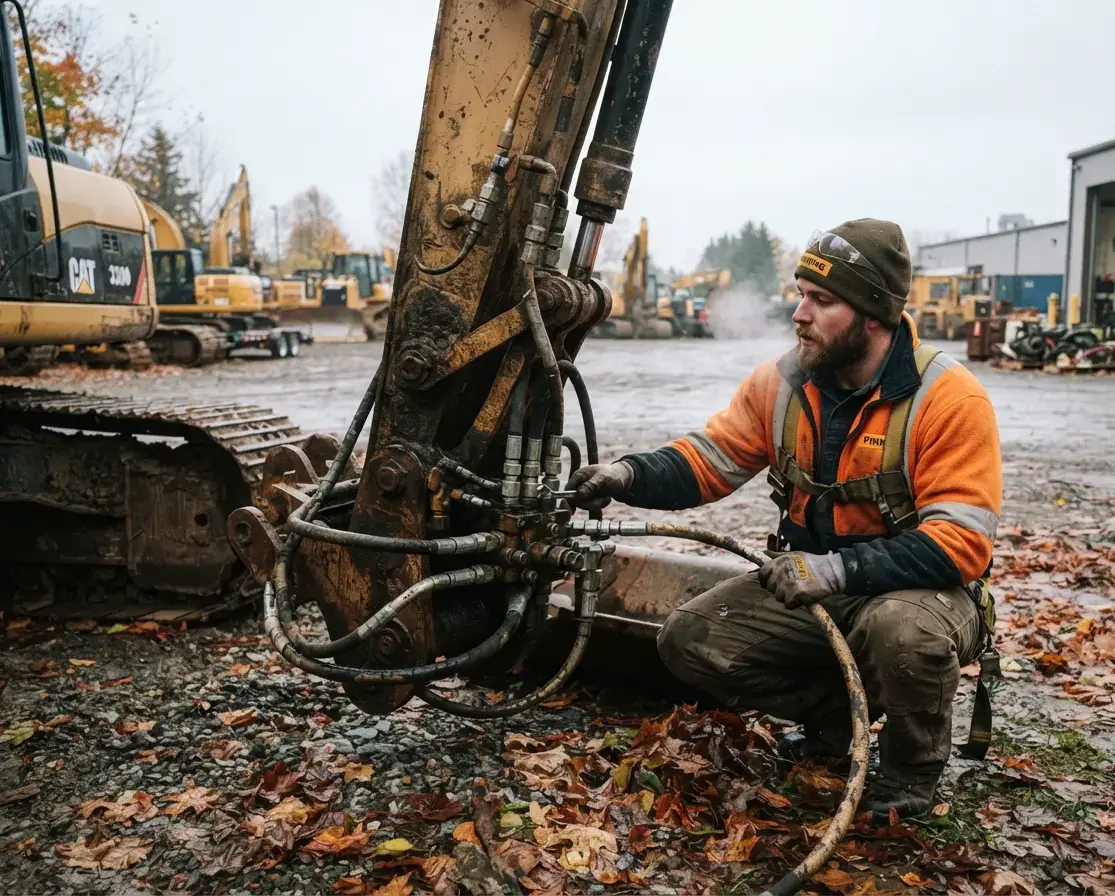
External abrasion is the single most common reason hoses wear out early. Hoses sit close to frames, sharp edges, moving parts, and each other. Every cycle, they rub. Over weeks that rubbing wears through the outer cover, exposes the wire reinforcement underneath, and from there a leak or a burst is only a matter of time.
On a demolition or excavation site the abrasion is worse, because the hose is also getting scraped by what the machine is digging through. Rebar, broken concrete, gravel, and steel debris nick and gouge hoses that swing into them. Sandy Long Island soil acts like a slow grinding paste on any line that drags or sits in it.
Tight bends and bad routing
A hose forced past its minimum bend radius wears from the inside. The reinforcement layers shift, weak points form, and service life drops sharply. This happens constantly after field repairs, when a replacement hose gets routed a little tighter or a little differently than the original. It looks connected and it holds pressure, so nobody questions it. It is also wearing out faster than the hose it replaced.

Heat and sun
Summer on Long Island stacks two stresses at once. Ambient heat climbs, equipment runs at peak workload, and hydraulic systems run hotter as a result. Add direct sun on the lines running across the top of a machine, where they take UV all day, and the rubber compound hardens and cracks faster than it would in a cooler season. The hoses near the engine bay take engine heat on top of all that.
Salt, moisture, and coastal air
This one is specific to where you work. Long Island is a barrier-island environment. Coastal humidity, salt air, and road-salt residue that gets tracked onto equipment all attack metal fittings and crimp connections. Corrosion at the fitting is a leak waiting to happen, and it tends to start where you cannot easily see it, right at the connection.
Pressure spikes and impulse cycling
Every time a machine starts and stops a function, the hydraulic system sees a pressure spike. Breaker and hammer work, attachment changes, and the stop-start rhythm of a crowded suburban job site put a hose through thousands of pressure impulses a day. That cycling fatigues the hose from the inside, independent of any visible wear on the outside.
Contamination from field repairs
Dirt is the enemy of a hydraulic system, and a job-site repair is exactly when dirt gets in. A line opened in the field, in the dust, without clean conditions, can introduce contamination that scours the inside of hoses and components and shortens the life of everything downstream.
The wear that shows up first
Most hoses give warning before they blow. The trick is knowing what to look for and actually looking. Walk your high-exposure lines and check for:
- Cover abrasion that has worn down to, or through, the wire braid
- Surface cracking or a hard, brittle feel where the hose used to flex
- Weeping or seepage at a fitting, even a small one
- Blistering or bulging anywhere along the hose body
- Kinks, flat spots, or a tight bend that was not there originally
- Rust or corrosion at the crimp and fitting
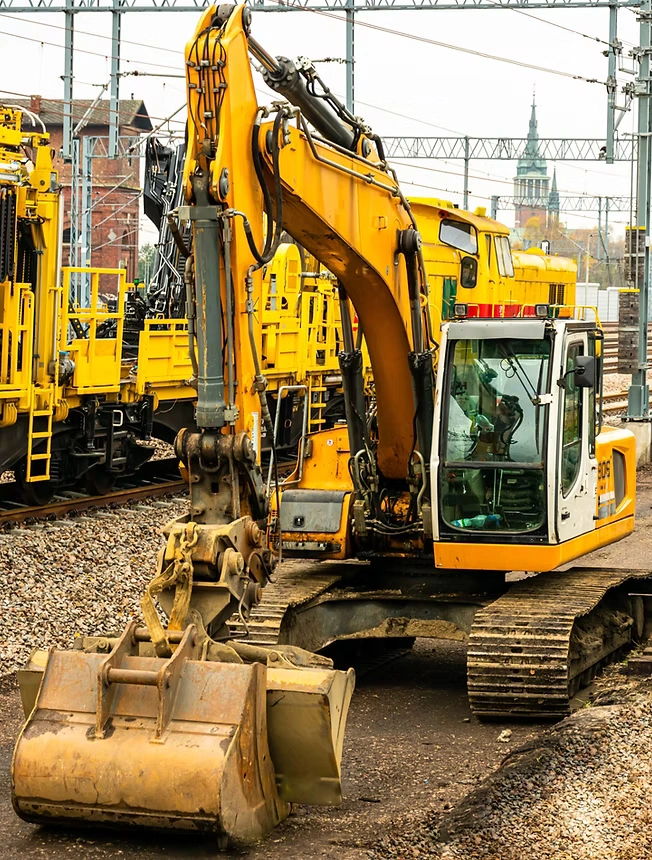
Any one of these means that hose is on borrowed time. A weeping fitting in particular is not something to tighten and forget. It is telling you the connection is failing.
Why job-site wear becomes a downtime problem
A worn hose is cheap. The failure is not.
When a hose lets go, the machine stops. On a tight Long Island site, one stopped machine rarely stops alone. The crew working around it stalls. The grading that was supposed to finish today does not. Inspections, permit windows, concrete deliveries, and the trades scheduled behind you all assume that machine is running. When it is down for half a day waiting on a hose, that lost time does not come back.
That is the real math of job-site hose wear. The part costs almost nothing. The blown schedule is what costs you.
How to stay ahead of job-site hose wear
You cannot stop a job site from being hard on hoses. You can stop it from catching you off guard.
Inspect by exposure, not by the calendar alone. The lines that take the most abrasion, heat, and movement, usually the ones running along the boom and across the top of the machine, deserve attention first and most often. They wear fastest, and they are the ones most often overlooked.
Replace on a rotation instead of on failure. Pulling the oldest, most exposed hoses on your highest-use machines on a planned schedule turns an unpredictable breakdown into a known maintenance cost. It is the difference between replacing a hose in the yard on your time and replacing it on site, mid-job, on the site’s time.

Keep the common assemblies on hand. A failure only means extended downtime if the right hose is an hour or a day away. Stocking the hose and fitting configurations your fleet actually runs, at your location, removes most of that wait. Our on-site inventory management program is built for exactly that, and our shop in Massapequa builds custom hydraulic hose assemblies while you wait, usually in minutes, when you need one now.
And when something does fail after hours, which it eventually will, our 24/7 emergency service is there so a down machine does not sit overnight.
FAQ
How long do hydraulic hoses last on a construction job site?
There is no fixed number, because hose life depends on exposure, not just age. A hose on a hard-working machine in abrasive, high-heat conditions can wear out in a fraction of the time of the same hose on lighter work. Inspect based on how hard the machine actually runs, not on a calendar date alone.
What is the most common cause of hydraulic hose failure on a job site?
External abrasion. Hoses rubbing against frames, edges, other hoses, and job-site debris wear through the outer cover, expose the reinforcement, and fail. Site damage from rebar, concrete, and steel is a close second on demolition and excavation work.
Can you replace a hydraulic hose on site instead of hauling the machine to a shop?
Yes, and for a down machine it is almost always the faster and cheaper option. Moving a disabled machine to a shop adds transport time and cost before any repair even starts. Onsite replacement gets the equipment running where it sits.
How do I know a hydraulic hose is about to fail?
Look for cover abrasion down to the wire braid, surface cracking or stiffness, weeping at a fitting, blistering, kinks, and corrosion at the crimp. Any of these means the hose should be replaced, not watched.
Does Long Island weather affect hydraulic hose life?
Yes. Coastal salt air and road-salt residue corrode fittings and crimp connections, and summer heat plus UV exposure harden and crack the rubber faster. Both shorten hose life in ways that are specific to working on the Island.
The takeaway
Your job site is aging your hoses faster than the hour meter shows, and the wear is happening in places you do not usually look until something fails. Catching it early is the whole game. A worn hose found during an inspection is a five-minute fix on your schedule. The same hose found when it blows is a stopped machine, a stalled crew, and a day you do not get back.
If you want a second set of eyes on the hoses your Long Island fleet is running, or you want the right assemblies stocked before you need them, that is the kind of work we do every day. The goal is simple: the hose never lets go mid-shift.